
 Despite the challenges, one in four leaders anticipate improvement, up from last year’s 20 percent. Image courtesy of Business of Fashion
The global fashion industry is bracing for a difficult 2026.
Delivered on Nov. 17, new research from consulting firm McKinsey & Co. and The Business of Fashion (BoF) confirms that trade disruptions, geopolitical tensions and sliding consumer sentiment are the biggest challenges for the industry, according to the State of Fashion 2026, the tenth annual report from the duo. Nearly half of industry leaders expect conditions to deteriorate next year, a sharp rise from a year ago, and 78 percent view declining consumer confidence as the sector’s most significant challenge.
“Fashion’s old playbook no longer applies,” said Imran Amed, founder and chief executive officer of The Business of Fashion, in a statement.
“Tariffs, technology and new consumer priorities are forcing a fundamental reset,” Mr. Amed said. “The State of Fashion 2026 challenges leaders to act with urgency — to rewire their organisations for agility, embed AI at the core of how they operate and reconnect with customers who are redefining what value really means.”
Global overview
With a decade marked by constant change, fashion executives have accepted the volatility and have come to replace the usage of the word “uncertainty” with “challenging.”
With global fashion markets expected to grow only in the low single digits, competition for market share will intensify. Europe is forecasted to expand by 1 to 2 percent, while the United States and China are projected to grow between 1 to 3 percent.
The slew of recent creative director appointments (see story) may bolster luxury brands, though mid-market brands have overtaken luxury as the industry’s “main value creator in 2024.”
However, brands across all price points are feeling the pressure from consumers who are scaling back their spending. Yet, 31 percent of shoppers admit to a willingness to “splurge on fashion if it is the right product.”
Despite the challenges, one in four leaders anticipate improvement, up from last year’s 20 percent. Areas generating optimism include jewelry, wearable tech in the form of eyewear and the resale market.
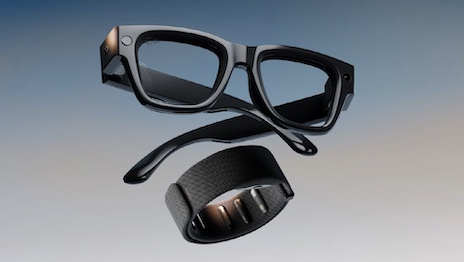 The broader wearable market is expected to grow about 9 percent annually through 2028. Image courtesy of Business of Fashion
“In this context, jewelry becomes a medium for everyday expression, even when the economy is troubled,” said Alexis Nasard, CEO of Swarovski, in a statement.
“Jewelry is ultimate discretionary spending, but in markets like the U.S., as long as consumers have some money to spare and the value proposition resonates, they will spend.”
With the implementation of the U.S. tariffs in 2025, 76 percent of executives expect increased trade friction and rising duties to heavily influence the industry next year. Price increases are planned across markets, especially in North America, where nearly half of all leaders expect to raise prices by more than 5 percent.
“We are taking some surgical and targeted pricing [increases], as probably most apparel or retailers are,” said Michelle Gass, CEO of Levi’s, in a statement.
“There’s only so much you can absorb from the tariffs, because they’re just very high.”
Harnessing tech
Technology, particularly generative artificial intelligence, is emerging as the industry’s most significant opportunity, as consumers develop trust for the tools, with 23 percent admitting to utilizing AI to discover new products.
With the increase in consumer search, companies are implementing software such as geneartive engine optimization (GEO).
GEO optimizes online content for AI, making products and content easier for AI to read and will work alongside SEO. The acceleration of AI-discovery is enhanced by consumers' reported trust of generative AI search results, with 41 percent saying they prefer AI search to traditional advertising.
Smart glasses are poised for breakout growth, with analysts expecting sales to quadruple in 2026 and for the category to exceed $30 billion by 2030.
 Kering Eyewear and Google’s new partnership will marry elegant silhouettes with state-of-the-art technology. Image credit: Kering Eyewear
Most recently, French luxury conglomerate Kering announced a partnership with Google for the development of smart frames (see story). Meanwhile, Italian eyewear conglomerate EssilorLuxottica acquired Belgium-based Automation & Robotics to aid in its production capabilities this summer (see story) after extending its smart frame development deal with Meta last year (see story).
The broader wearable market is expected to grow about 9 percent annually through 2028.
“I do believe even for fashion, having some technical part of some IP, or something you can really own as a fashion brand, is key, because wearables are only going to increase and evolve,” said Rocco Basilico, chief wearables officer of EssilorLuxottica, in a statement.
“If I were a fashion brand starting now, let’s say, in my roadmap, I would definitely put wearables.”
While 92 percent of companies will up their generative AI investment, only 1 percent are ready to roll out the technology. Companies are preparing for an AI-heavy future, reporting on the need for workforce retraining as it is anticipated that by 2030 about 30 percent of “employee time across industries could be automated by generative AI and other technologies in Europe and the U.S.”
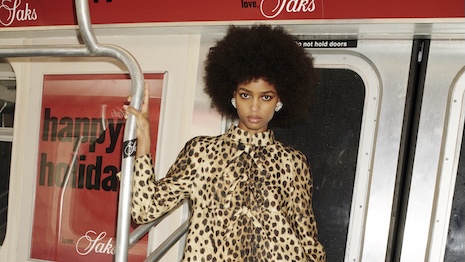 The luxury storefront partnered with NLX, founded in 2018, which develops conversational AI solutions for businesses. Image courtesy of Saks/Angelo Pennetta
In August, U.S. retailer Saks Fifth Avenue introduced a voice-first, generative AI “assistant” tool for enhanced customer service, which saw service agents reduce their post-call processing time by 15 seconds per conversation (see story).