
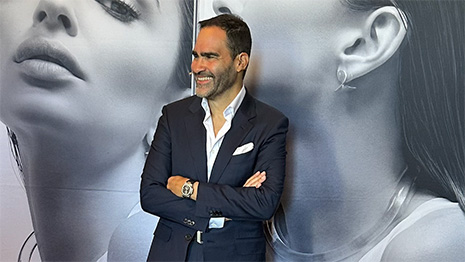
 Daniel Langer is the founder and CEO of consulting firm Équité
I still remember the first time I drove a Ferrari.
It was the 812 Superfast, of course in red, through the streets of Tokyo. The ignition roared like a living creature.
The experience was visceral and overwhelming in the best way.
Cultural power defines luxury
Acceleration hit with a force that made my pulse race. Controlling it felt like holding onto a racehorse at full speed.
Years later, the memory remains sharp. That moment changed how I saw cars.
Ferrari had the ability to turn engineering into emotion and elevate driving into something extraordinary. Back then, Ferraris often appreciated in value.
Collectors spoke about them the way people talk about Birkin bags. Buying one was both a thrill and a smart decision.
It felt like entering a rarefied world where every detail had meaning and every gesture carried weight.
Today the atmosphere around Ferrari is shifting. In recent weeks, the company has scaled back its long-term ambitions, which sent shockwaves through the financial markets and led to its sharpest stock drop in years.
The Formula 1 team is struggling to deliver. The first electric model has failed to ignite widespread excitement.
Design changes have divided loyalists. Resale values are weakening.
Taken together, these developments show a brand that is entering a moment of real pressure.
The world’s most influential luxury brands reach far beyond their products. They create meaning.
They shape culture. They inspire emotion.
Ferrari has been one of the great masters of this. For decades, the brand stood for precision, beauty and power.
It turned cars into cultural symbols and driving into theatre. When a name with this kind of cultural authority begins to lose momentum, the implications stretch well beyond one company.
It reveals how delicate even the strongest myths can become when clarity fades.
The luster can fade quickly
Many luxury brands spent the past decade in expansion mode. Stores opened everywhere.
Prices climbed. Product lines grew wider.
On paper, everything looked strong. Yet in many cases the emotional spark started to dim.
Experiences became repetitive. Stories lost intensity.
Clients felt less inspired. Ferrari’s current situation illustrates how quickly perception can shift.
Once hesitation enters the conversation, it spreads fast through investors, clients and communities. Cultural icons rely on momentum, and when that slows, questions multiply.
Extreme value creation sets the standard
The future of luxury will belong to brands that create extraordinary value in every interaction. Financial strength matters, but so does the ability to lead culture, generate emotion, and inspire confidence.
Clients look for experiences that move them. Investors pay attention to vision and consistency.
Communities gravitate to brands that stand for something meaningful. Ferrari set this benchmark for decades.
The combination of myth, performance and cultural resonance was unmatched. Recent signs show how fragile this position can become when the story is no longer fully owned.
A critical moment for luxury
Ferrari’s story reflects a broader pattern in luxury. Many brands rely heavily on their past while the world around them changes rapidly.
Heritage has value, but it cannot carry the entire future. Prestige weakens when the emotional engine slows.
Luxury clients are exceptionally attuned to shifts in energy. They interpret hesitation.
They pick up on strategic missteps. Their reactions are swift.
This is a moment for leadership teams to pause and look inward. Are clients still deeply inspired?
Is the cultural role of the brand still clear? Is the vision communicated with strength?
These are uncomfortable questions, but they determine whether a brand continues to thrive or gradually loses relevance.
Act before the aura fades
Ferrari has the potential to recover. Its engineering brilliance and emotional power run deep.
What this moment shows, however, is that no icon is untouchable. Luxury depends on trust, desire and cultural significance.
When any of these weaken, the brand’s position starts to slip. The implications for any luxury brand are profound.
Now is the time to act decisively. Logos alone do not protect a brand.
Growth curves offer little defense against fading desire. History can only carry a name so far.
Success in the next chapter of luxury depends on the ability to create intense emotional connections, inspire clients with confidence and keep their stories alive with clarity and force.
Ferrari once defined this standard. Its current challenges are a reminder of how important it is to protect and renew that power every single day.
Luxury Unfiltered is a weekly column by Daniel Langer. He is the CEO of Équité, a global luxury strategy and creative brand activation firm, where he is the advisor to some of the most iconic luxury brands. He is recognized as a global top-five luxury key opinion leader. He serves as the executive professor of luxury strategy and pricing at Pepperdine University in Malibu and as a professor of luxury at New York University, New York. Dr. Langer has authored best-selling books on luxury management in English and Chinese and is a respected global keynote speaker.
Dr. Langer conducts masterclass management training on various luxury topics around the world. As a luxury expert featured on Bloomberg TV, Financial Times, The New York Times, Forbes, The Economist and others, Mr. Langer holds an MBA and a Ph.D. in luxury management and has received education from Harvard Business School. Follow him on LinkedIn and Instagram, and listen to his Future of Luxury Podcast.