
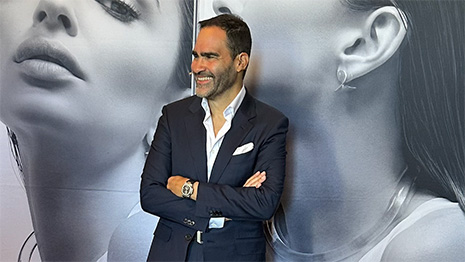
 Daniel Langer is the founder and CEO of consulting firm Équité
For a century, the German automotive industry commanded the world's most powerful premium: the engineering premium.
Take Mercedes, BMW, Audi or Porsche. These brands charged 30 to 60 percent more because their engines were better, their handling was sharper and their build quality was unmatched, so customers paid willingly because they could feel the difference every time they turned the key.
That premium is evaporating.
The combustion pivot will not save you
Some executives will point to the pivot back toward combustion as validation.
Electric vehicle sales have softened. Chinese EV growth has slowed.
The temptation is to conclude that the traditional model still works. This is the most dangerous misreading of the market imaginable.
The world will be electric. The only question is timing.
The pivot buys time. It does not buy a future.
In an electric world, the drivetrain is a commodity. A $30,000 Chinese EV accelerates as fast as a $90,000 German one.
The engine, which was the soul of the German premium, becomes irrelevant. Returning to combustion temporarily does not alter the fact that the customer is shifting, and when the shift completes, the brands that invested in the future will own it while those that retreated to the past will have wasted their last window to transform.
The technology redefinition Germany missed
German automakers define technology as driving engineering.
Chinese automakers define technology as a client-centric experience: entertainment ecosystems, autonomous capability and seamless connectivity.
Most people do not drive their car. They sit in it.
They commute. They wait.
BYD, NIO and Xpeng built cars for the 95 percent of ownership time the vehicle is stationary. The German industry optimized for the 5 percent.
Some German brands have recognized this shift.
Mercedes invested heavily in screens. The new E-Class and S-Class interiors are dominated by displays.
The new Porsche Cayenne follows the same direction. But here is the mistake: they thought people were buying screens.
People are not buying screens. People are buying content, entertainment and connectivity.
A larger display that shows the same navigation, the same settings menu, and the same instrument cluster in a different form factor is not innovation. It is an engineer's interpretation of what a consumer wants, delivered as hardware rather than experience.
It is a different way of displaying what the car already displayed. That is a form factor change, not a value creation.
The Chinese understood this. Their vehicles are entertainment platforms.
Their software ecosystems update continuously. Their user interfaces were designed by consumer technology teams, not automotive engineers.
The gap is not in screen size. It is in the fundamental understanding of what the customer values during the hours spent inside the car.
The depreciation death spiral
A traditional German luxury car held 50 to 60 percent of its value after three years. An electric car depreciates like a technology product because it is one.
The battery degrades. The software becomes outdated.
No rational consumer pays a compounding premium for a rapidly depreciating technology asset unless the brand ecosystem creates transcendent value. Apple achieves this because its ecosystem creates switching costs that deepen over time.
German car brands have no equivalent. A BMW customer can switch to any competitor at the next purchase with zero switching cost.
Without ecosystem lock-in, the premium collapses to the strength of the brand alone.
Heritage is not desire
German car brands have heritage, awareness and respect. They do not have desire.
Heritage tells you where a brand has been. Desire determines where it is going.
When functional superiority has been commoditized, the only defense is a brand so emotionally compelling that customers choose it independent of specification.
The best brands in categories that do not differentiate through technology understand this. Louis Vuitton stands for the thrill in the art of travel.
Patek Philippe stands for the creation of legacy. Rolex stands for the perpetual quest for excellence.
These are emotional territories that generate desire beyond any spec sheet.
The first question every German car CEO should ask: what is our point of view?
Which emotion do we want to be remembered for? If the answer is "iconic," "modern luxury" or "technology leadership," the brand has not done the work.
These are empty descriptors, not identities. They generate awareness, not longing.
Porsche, with "driven by dreams," approaches genuine emotional territory, but the execution lacks consistency and consequence. The rest of the German industry has nothing comparable.
But a brand story is only the starting position. To survive, they must build ecosystems around that identity.
Apple no longer uses "Think Different" as a slogan, but it still reflects its core value: providing those bold enough to change the world with the tools to do so. That invitation allowed Apple to build an ecosystem spanning technology, software, financial services and media content, all united under one unified point of view.
The German car industry needs an equivalent transformation: from selling engineered machines to building identity-driven ecosystems that customers choose to inhabit.
The platform is burning
The timeline is brutal. Within three years, Chinese brands will own the accessible premium segment in Europe, the volume heart of German profitability.
Within five years, the retreat upmarket accelerates, but electrification will have caught up, snapping the trap shut: German brands will be operating in a high-price segment where customers increasingly refuse to pay premiums for rapidly depreciating technology assets.
Within 10 years, at least one of the storied German automakers will no longer exist as an independent company. The factories in Stuttgart, Munich and Ingolstadt that employed generations will face the same fate as those in Detroit.
The platforms are burning, and all the German car industry is producing is more of the same.
The German car industry once built the finest engines in the world. The world moved on.
The question is whether they can move with it, or whether they will be remembered as the most perfectly engineered failure in business history.
Luxury Unfiltered is a weekly column by Daniel Langer. He is the CEO of Équité, a global luxury strategy and creative brand activation firm, where he is the advisor to some of the most iconic luxury brands. He is recognized as a global top-five luxury key opinion leader. He serves as the executive professor of luxury strategy and pricing at Pepperdine University in Malibu and as a professor of luxury at New York University, New York. Dr. Langer has authored best-selling books on luxury management in English and Chinese and is a respected global keynote speaker.
Dr. Langer conducts masterclass management training on various luxury topics around the world. As a luxury expert featured on Bloomberg TV, Financial Times, The New York Times, Forbes, The Economist and others, Mr. Langer holds an MBA and a Ph.D. in luxury management and has received education from Harvard Business School. Follow him on LinkedIn and Instagram, and listen to his Future of Luxury Podcast.