
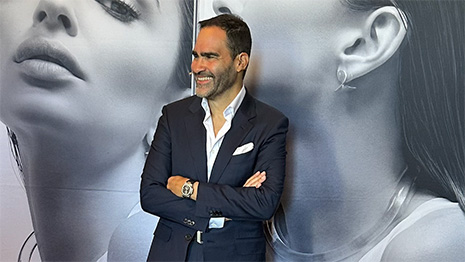
 Daniel Langer is the founder and CEO of consulting firm Équité
 Most luxury brands believe they have a service problem.
They do not. They have something far more dangerous and far harder to detect.
They have an authenticity problem that wears the costume of service excellence.
The interactions look polished. The associates are attentive.
The choreography unfolds correctly, and yet, the customer walks out feeling, without being able to articulate why, that something essential never happened. That feeling is the problem, and it is becoming the defining failure of the luxury category.
There is a distinction at the heart of every luxury interaction that the industry has stopped taking seriously.
Listening to understand is presence. Listening to respond is performance.
In ordinary life, the difference is uncomfortable but survivable. In luxury, it is fatal, because luxury is the one category where the interaction is the product.
When the listening is performed rather than practiced, the brand has not delivered a flawed version of luxury. It has delivered a counterfeit.
What is happening across luxury retail today is not that brands have failed to listen. They have built systems that mimic listening so effectively that the failure has become invisible from the inside.
Scripted adaptability is the mechanism. Associates are trained to recognize patterns in what customers say, classify them rapidly into predefined response categories, and deliver an experience that feels personalized while remaining structurally identical from one customer to the next.
The opening question is a triage device disguised as curiosity. The follow-up is a pre-loaded script triggered by keywords.
The recommendation is a calculated sequence designed to produce conversion. The customer experiences this as service.
The brand reports it as a success. Neither party sees the interaction for what it is.
I sent my students out to evaluate luxury retail experiences across categories: jewelry, watches, fashion, hospitality and automotive. The results were unambiguous, and they confirm what years of mystery shopping research and field observation have already established.
Consider one moment that stood out. A student walked into a major fashion house and told the associate she was drawn to minimalism. The associate immediately produced slightly less ornate versions of the brand's signature aesthetic.
No question about what minimalism meant to her. No curiosity about whether the brand's interpretation matched her own.
No willingness to acknowledge that the brand might not be the answer to what she had described. The word had triggered a response.
The person had not been heard. By the end of the interaction, the student felt classified rather than recognized, and the brand had lost a potential client without ever knowing she had been there.
This is the pattern that surfaced across the category. Not rude interactions.
Not inattentive ones. Sophisticated, well-choreographed exchanges that produce the appearance of personalized service while delivering an experience structurally identical from one customer to the next.
The reason this matters now, more than at any previous moment in luxury's history, is that the next generation of luxury clients can detect the pattern in real time.
Younger consumers are not impressed by polish; they are alarmed by it. They have been raised inside content environments where authenticity signals are the primary currency, and they have developed an instinct for distinguishing performed attention from genuine presence within seconds of an interaction beginning.
When they identify the pattern, they do not complain. They do not give the brand a chance to recover.
They simply leave, often before the associate has finished the second sentence of the script, and they do not return. The brand never learns why.
The data registers a soft conversion, a missed opportunity, a customer who was not ready to buy. The reality is that the customer was not ready to be processed.
This is the structural cost the industry has not yet confronted. Every interaction designed around scripted adaptability is teaching the next generation of luxury clients that the category cannot be trusted to deliver what it promises.
The promise is recognition, exclusivity, meaning. The delivery is classification dressed up as personalization.
The gap between those two things is widening, and the brands continuing to invest in more sophisticated scripts are widening it faster.
The path forward requires confronting an uncomfortable truth: most luxury sales training is the problem, not the solution. The current training model produces associates who are excellent performers of brand narrative and effective deployers of conversion techniques.
Those skills now actively work against the brand. What luxury needs is different training, focused on a different craft entirely.
That craft is presence. It is the discipline of asking questions without preloaded answers.
It is the willingness to sit in conversational uncertainty rather than fill it with product talk. It is the ability to recognize what a customer is communicating beyond the literal words, and to respond to the unstated emotional context rather than the surface request.
The encouraging signal is that the most forward-looking brands in the industry already recognize this. I returned recently from Asia, where I led a masterclass with the sales team of a major luxury brand on exactly these capabilities.
What stood out was the appetite in the room. The most experienced associates engaged seriously with a craft they had not previously been asked to develop, and the brand had committed to building a different kind of capability into its sales culture. That is the move the rest of the industry will need to make, and the brands that move first will define the next decade of luxury.
The strategic test now facing the luxury industry is straightforward. Mimicking real listening is becoming easier to produce and easier to detect at the same time.
The brands that continue refining the script will lose the next generation regardless of product quality. The brands that invest in training a different kind of capability entirely are the ones that will set the standard for what luxury means going forward.
The product is no longer the product. The interaction is. And the customer can tell the difference.
Luxury Unfiltered is a weekly column by Daniel Langer. He is the CEO of Équité, a global luxury strategy and creative brand activation firm, where he is the advisor to some of the most iconic luxury brands. He is recognized as a global top-five luxury key opinion leader. He serves as the executive professor of luxury strategy and pricing at Pepperdine University in Malibu and as a professor of luxury at New York University, New York. Dr. Langer has authored best-selling books on luxury management in English and Chinese and is a respected global keynote speaker.
Dr. Langer conducts masterclass management training on various luxury topics around the world. As a luxury expert featured on Bloomberg TV, Financial Times, The New York Times, Forbes, The Economist and others, Mr. Langer holds an MBA and a Ph.D. in luxury management and has received education from Harvard Business School. Follow him on LinkedIn and Instagram, and listen to his Future of Luxury Podcast.