
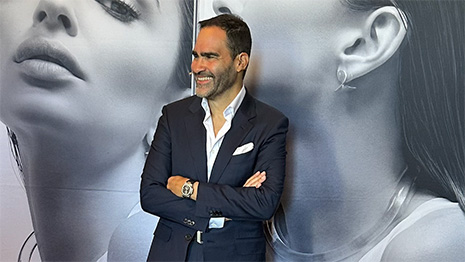
 Daniel Langer is the founder and CEO of consulting firm Équité
The global luxury industry is operating on an assumption that may prove dangerously wrong: that the conflict in the Middle East will end soon, markets will stabilize, and business will return to something resembling normal.
The structural evidence suggests otherwise. One month in, the conditions for a swift resolution remain absent.
The disruption is not temporary.
It is structural. The closure of the Strait of Hormuz has fractured shipping routes, spiked energy and fertilizer prices, grounded flights across the Gulf, and triggered emergency measures from Australia to Jordan.
When bypass pipelines built specifically as insurance against this scenario are themselves destroyed, the timeline from ceasefire to recovery extends from weeks to months. Every model built on a quick return to normal is built on infrastructure that no longer exists.
But the deeper challenge for luxury is not logistical. It is financial, and then psychological.
More than $100 billion in market capitalization has been wiped from major luxury stocks since the conflict began. LVMH and Hermès have each lost more than $40 billion.
Kering, Richemont, Burberry, and Brunello Cucinelli have all declined sharply, with some approaching 20 percent monthly losses. UBS describes investor sentiment as the "most bearish in years."
I have had several conversations that confirm the pessimistic outlook. The recovery that was supposed to define 2026 has been postponed indefinitely.
This is where the real danger begins. When stock prices fall this hard and this fast, the pressure on management teams becomes intense.
Boards demand margin protection. Investors expect cost discipline.
The reflex is predictable: cut marketing budgets, defer client experience investments, reduce training programs, thin the creative teams and raise prices to offset lost volume. In a normal downturn, some of this is prudent.
In this downturn, it is potentially fatal. The temptation to raise prices will be acute.
Inflation provides cover. Input costs provide justification, and the 2021-2023 cycle demonstrated that clients would absorb significant increases without apparent resistance.
But that cycle operated in a fundamentally different environment: stimulus-fueled liquidity, post-pandemic spending, and asset price inflation that made clients feel wealthier. None of those conditions exist today.
Gas prices are approaching $4 a gallon on average in the United States and exceeding $6 in some states. Stagflation warnings from the ECB in Europe.
Energy costs surging across Asia, where 84 percent of Gulf crude is bound. Consumer sentiment collapsing in every major economy simultaneously.
Raising prices in this environment does not protect margins. It accelerates the client defection that the price increase is meant to offset.
The client who accepts a 10 percent increase when feeling prosperous rejects a 5 percent increase when feeling anxious.
This is the gap between what investors want and what clients need, and it is the gap that will separate the brands that emerge stronger from the ones that hollow themselves out.
Cost-cutting to please the quarterly report while the client relationship erodes is borrowing from the future to pay for the present. The brands that emerged strongest after 2008 and 2020 were not the ones that cut deepest.
They were the ones who understood a crisis is the moment when brand equity either compounds or collapses, depending on actions.
The behavioral shift underway is not limited to the Gulf, where ultra-high-net-worth clients have moved from acquisition to preservation. It is global.
The American family cancelling its vacation because of fuel prices is the same family that was the aspirational luxury client 18 months ago. The European consumer watching the ECB warn of recession is recalibrating every discretionary purchase.
The Chinese client who was supposed to drive the recovery is watching energy costs ripple through the Asian economy. Every client segment, everywhere, is asking the same question with new urgency: does this brand deserve my money right now?
The answer will not come from another campaign, another collaboration, or another limited edition. It will come from whether the brand has built something that holds meaning when the world feels uncertain.
Clients who feel abandoned during a difficult period do not return when conditions improve. They remember who disappeared.
They remember which maison maintained its standards and treated them as human beings rather than revenue targets.
Three imperatives for luxury leaders navigating what may be a prolonged period of instability.
First, do not cut the investment that built your brand. Do not cancel critical client events.
Do not reduce training budgets; in a crisis, client service matters even more. Do not replace the creative director with a cost engineer and settle for average.
Luxury is always about inspiration. Do not thin the leather and hope nobody notices.
The brands that are now over-investing in storytelling, experience, and emotional resonance while competitors retreat will own a disproportionate share of attention when confidence returns.
Second, earn the right to your price before raising it. Every price point must be justified by an experience that is visibly, tangibly superior.
Today, many brands have a severe deficit in this dimension. If a client walks into a boutique and encounters indifference or engages digitally and finds nothing that inspires, the price becomes an insult rather than an invitation.
In a low-trust environment, the gap between price and experience is the gap that kills brands.
Third, recognize that your clients have changed. The person making a luxury purchase decision in the second half of 2026 is not the same person who made that decision in 2024.
They are watching their portfolios declining and energy costs rising. They have watched assumptions about stability dissolve in real time.
They are not buying to display. They are buying to feel something real and unique.
The brands that understand this and respond with substance will define the next chapter of luxury. The ones that reach for the price lever while hollowing out the substance will discover that what they thought was a temporary crisis was a permanent rearrangement of what their clients value.
The conflict in the Middle East is reshaping economies, displacing families and causing immeasurable human suffering. Its consequences for the luxury industry, while incomparably smaller in scale, are real and lasting.
But the greatest threat to luxury brands will not come from the disruption itself. It will come from how they respond to it.
The fight for quarterly margins is the one most boards are engaged in right now. The fight for the client's trust is the one that will determine who survives.
Most of the industry has not yet recognized which one matters more.
Luxury Unfiltered is a weekly column by Daniel Langer. He is the CEO of Équité, a global luxury strategy and creative brand activation firm, where he is the advisor to some of the most iconic luxury brands. He is recognized as a global top-five luxury key opinion leader. He serves as the executive professor of luxury strategy and pricing at Pepperdine University in Malibu and as a professor of luxury at New York University, New York. Dr. Langer has authored best-selling books on luxury management in English and Chinese and is a respected global keynote speaker.
Dr. Langer conducts masterclass management training on various luxury topics around the world. As a luxury expert featured on Bloomberg TV, Financial Times, The New York Times, Forbes, The Economist and others, Mr. Langer holds an MBA and a Ph.D. in luxury management and has received education from Harvard Business School. Follow him on LinkedIn and Instagram, and listen to his Future of Luxury Podcast.