
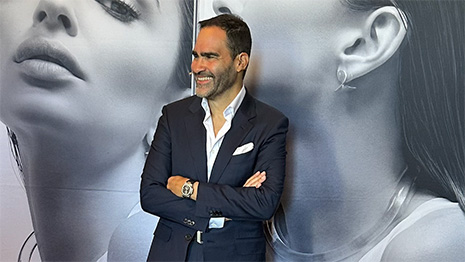
 Daniel Langer is the founder and CEO of consulting firm Équité
For many years, I have dedicated a significant part of my academic research to one question: what truly creates value in luxury?
There are many misconceptions. When you decode the perceived value of a luxury item, then the cost of materials and functional attributes just represent a fraction of the total value.
Luxury is extreme value, and it is created through a set of psychological effects that go far beyond the object itself.
Luxury value
One of the most important concepts I have developed over time is what I call Added Luxury Value, or ALV.
It is one of the least understood and most powerful drivers of pricing power in the industry. It is also the reason why some brands can increase prices to a certain extent – because they create so much ALV that the price increase keeps it below, while others are now facing resistance, client frustration and dramatically declining desirability.
ALV is the hidden value source that sits between the tangible features of a product and the emotional perception that clients attach to the brand. It is difficult to measure, but its impact is unmistakable.
When a Hermès Birkin sells for significant multiples of the cost of the materials, the difference is ALV. When women’s handbags create higher emotional value and prices, despite sometimes having fewer materials than men’s work bags, the gap is ALV.
When two products with similar functionality exist in the same category, yet one consistently sells at a dramatically higher price, the deciding factor is ALV. It is the psychological premium that clients feel.
It is driven by brand storytelling, cultural equity, identity resonance and the brand’s ability to evoke emotion and aspiration. Understanding this hidden force is critical today.
Over the last few years, many brands believed that demand would continue indefinitely and that clients would accept any price the brand set. The post-pandemic boom made pricing look easy.
Strong demand masked the underlying fragility of ALV. Brands increased prices aggressively. They did so on the assumption that price reflects luxury.
What they overlooked is that price only works when ALV is strong enough to support it. This is where many brands started to lose their footing.
Instead of focusing on strengthening the emotional and cultural foundations of their brands, they leaned on price increases as the primary growth lever. That strategy worked until it stopped working.
Today, the industry is experiencing a reality check. Luxury clients are more discerning.
Competition is more intense. Expectations are higher than ever, and brands that have not invested in elevating ALV are feeling the effects.
Perception and pricing
Pricing power in luxury is not a financial tactic. It is the strategic outcome of managing perception.
When I advise leadership and marketing teams or train client-facing teams, I emphasize that the role of a luxury brand is to create desire at a level that feels almost irrational.
This requires clear brand positioning, cultural relevance, emotional storytelling and consistent experiences that justify the premium. It requires building extreme value long before a product is in front of a client.
ALV is not generated in the finance department or by increasing prices because others do it, too. It is created across every touchpoint of the brand and at every single client interaction.
Consequently, if brands don’t match or exceed client expectations at just one touchpoint, all that was created collapses. In a recent quantitative study, we could show that fewer than two interactions below expectations destroy loyalty in luxury.
How much focus are you putting on this in your organization?
This is also where the disconnect becomes visible. Too many brands price based on category conventions.
The logic sounds like this. If a competitor charges a certain amount, we can go slightly higher.
If the market is used to a specific price range, we can stretch it. This approach ignores the core principle of pricing power.
Clients do not value categories. They value brands.
They value what the brand expresses about them. They value the feeling that a brand triggers when they buy, use or talk about a product.
When ALV is strong, a reasonable price increase may even strengthen my desire. When ALV is weak, the same increase feels unjustified and alienates clients.
The last two exposed this divide. Some brands priced themselves out of the market.
Others strengthened their value perception. The difference is their mastery of ALV.
Another factor is at play: the shift in client expectations. Younger luxury clients buy based on emotion, meaning, cultural relevance and personal identification with a brand’s values.
They expect brands to be deeply purposeful, globally aware and culturally fluent. They expect human interactions to feel personal and meaningful.
They expect experiences that reflect the brand story at every step. When these elements are missing, ALV erodes quickly.
Pricing power disappears with it.
Building ALV
In my work across categories, from fashion to aviation to automotive to fine spirits to hospitality, and beyond, I see the same pattern. Brands that invest in client experience, distinct and emotional storytelling, internal culture creation and significant luxury training build strong ALV.
They grow pricing power over time. They create demand even in a challenging market.
Brands that primarily focus on product, logistics, operations and category positioning without elevating the emotional dimension struggle to differentiate. Don’t get me wrong, brands must be excellent on these dimensions.
But it’s not enough. Without building up ALV with dedication and expertise, any brand will face declining desirability.
This brings us to an important reflection. ALV should never be treated as something that exists in the background or is a nice-to-have. It needs attention, clarity and consistent management.
When brands connect story, culture and client experience in a meaningful way, ALV becomes their strongest asset.
Pricing then becomes the logical outcome of the value they create, not a risky decision.
Luxury Unfiltered is a weekly column by Daniel Langer. He is the CEO of Équité, a global luxury strategy and creative brand activation firm, where he is the advisor to some of the most iconic luxury brands. He is recognized as a global top-five luxury key opinion leader. He serves as the executive professor of luxury strategy and pricing at Pepperdine University in Malibu and as a professor of luxury at New York University, New York. Dr. Langer has authored best-selling books on luxury management in English and Chinese and is a respected global keynote speaker.
Dr. Langer conducts masterclass management training on various luxury topics around the world. As a luxury expert featured on Bloomberg TV, Financial Times, The New York Times, Forbes, The Economist and others, Mr. Langer holds an MBA and a Ph.D. in luxury management and has received education from Harvard Business School. Follow him on LinkedIn and Instagram, and listen to his Future of Luxury Podcast.