
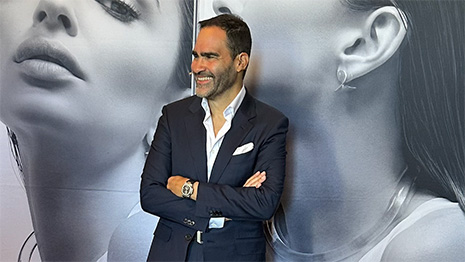
 Daniel Langer is the founder and CEO of consulting firm Équité
LVMH reported Q1 revenue of €19.1 billion, a 5.9 percent decline on a reported basis.
Organic growth came in at one percent, masked by a seven percent currency headwind and a one percent drag from the Iran conflict. Fashion and Leather Goods, the division that generates nearly half of the group's revenue and the vast majority of its profit, declined two percent organically.
That is the most important business unit in global luxury contracting through a quarter where U.S. consumer sentiment has fallen to 47.6, the lowest reading since the University of Michigan began tracking it in 1952.
What LVMH actually decided to do
Oil is above one hundred dollars a barrel. The Gulf crisis is dragging on.
Inflation expectations have spiked a full percentage point in a single month. The pressure on luxury spending is intensifying, and the data offers no indication that relief is close.
The question facing every luxury leader is what to do inside this environment. The instinct across the industry will be to protect margin.
The Q1 report from LVMH suggests a different answer, and it is buried not in the revenue line but in the P&L underneath it, in the relationship between margin compression and investment continuity. What that relationship reveals is the most important strategic signal the luxury industry has received in two years.
Through the downturn cycle of 2024 and 2025, LVMH made a choice most of the industry did not. The group held marketing investment at 9.5 billion euro, 11.5 percent of revenue.
Selling and marketing costs increased as a share of revenue, rising from 36.6 percent to approximately 38 percent. Headcount grew 4.3 percent in 2024 and continued growing through 2025, even as revenue declined.
Capital expenditure held in the five to six percent range. Operating margin compressed from 23.1 percent to 22 percent.
The group absorbed the margin hit rather than cutting the investment that builds brands.
CFO Cécile Cabanis stated the logic explicitly: “Some people cut investment to protect margin. It can work short-term, but it is not the right call for long-term performance.”
Bernard Arnault reinforced that conviction with €1.4 billion in personal share purchases during the downturn. A founder voting with personal capital that the investment thesis holds.
The evidence is visible. Louis Vuitton opened The Louis in Shanghai, a thirty-meter ship-shaped concept store merging exhibition, retail and hospitality into a single cultural destination.
Four mega-flagships for Louis Vuitton, Dior, Tiffany, and Loro Piana opened in Beijing. The Osaka World Expo pavilion drew 4.7 million visitors across five maisons.
Fifteen new flagships are planned through 2026. These are not the moves of a group protecting a quarterly print.
These are the moves of a group investing through the cycle to own the decade ahead.
Why LVMH’s Fashion and Leather Goods sales softened
The division that generates nearly half of LVMH's revenue declined two percent organically. The surface reading is that the profit engine is stalling.
The deeper reading is structural and industry-wide.
The global luxury customer base has contracted from 400 million to approximately 330 million, driven by cumulative price increases averaging 36 percent across the sector between 2020 and 2023. The aspirational client who powered the growth cycle has been priced out.
The Middle East conflict disrupted one of the fastest-growing luxury regions. Tourist spending remains in retreat.
Within the division, Louis Vuitton performed above average. Loro Piana continued to grow at double digits.
Dior is accelerating under Jonathan Anderson. The softness concentrated in smaller houses navigating creative transitions.
The decline in Fashion and Leather Goods sales is the structural correction that the entire industry is absorbing. It is also the environment that makes continued investment essential, because the houses that are built through this correction will set the terms for the next cycle.
The choice every luxury house faces
This is the question the Q1 cycle poses to every luxury leader. The temptation in a contraction is to protect margin by pausing investments that do not show returns on a ninety-day income statement.
Brand Storytelling. Client experience.
Creative inspiration. Cultural programming.
Craft infrastructure. Training.
Every one of these line items is discretionary on a quarterly cycle. Every one of them compounds on a multi-year cycle.
A house that cuts forty million from client experience to protect operating margin by a hundred basis points has purchased eighteen months of comfort at the price of five years of pricing power. Pricing power is a function of accumulated investment in desirability.
Remove the investment, and pricing power erodes invisibly until a client pauses before accepting a price increase. By the time that pause surfaces in the data, the erosion is permanent.
LVMH chose to let the margin compress rather than let brand investment contract. That choice is why the group will emerge from this cycle stronger than it entered.
The houses that choose to protect the spreadsheet will report strong quarters and lose strategic position.
The audit to run now
Pull the P&L from the last eight quarters. Track the ratio of brand-building investment to revenue across the cycle.
If the ratio held or expanded through the contraction, the brand is compounding. If it contracts to protect margin, the brand is being spent down, regardless of what the operating margin line reports.
Define the allocation ratio that the house will defend under any market condition. Make it the lead metric in the board pack, ahead of revenue, ahead of margin.
The houses that hold that commitment are being built over the next decade. The ones that allow allocation to become a plug variable will spend the next cycle explaining why pricing power disappeared.
The Q1 number that matters is the one inside the allocation detail. It reveals what the house decided to protect.
Every luxury leader should know that number by heart.
Luxury Unfiltered is a weekly column by Daniel Langer. He is the CEO of Équité, a global luxury strategy and creative brand activation firm, where he is the advisor to some of the most iconic luxury brands. He is recognized as a global top-five luxury key opinion leader. He serves as the executive professor of luxury strategy and pricing at Pepperdine University in Malibu and as a professor of luxury at New York University, New York. Dr. Langer has authored best-selling books on luxury management in English and Chinese and is a respected global keynote speaker.
Dr. Langer conducts masterclass management training on various luxury topics around the world. As a luxury expert featured on Bloomberg TV, Financial Times, The New York Times, Forbes, The Economist and others, Mr. Langer holds an MBA and a Ph.D. in luxury management and has received education from Harvard Business School. Follow him on LinkedIn and Instagram, and listen to his Future of Luxury Podcast.