
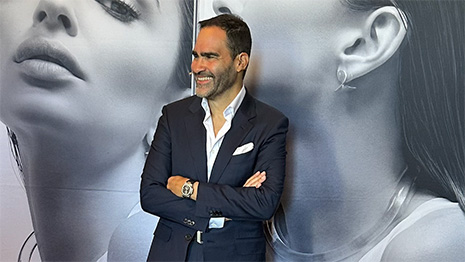
 Daniel Langer is the founder and CEO of consulting firm Équité
The sudden rise of Labubu as a cultural phenomenon offers more than a quirky story from the world of collectibles.
It is a signal of how luxury is evolving. Pairing Labubu with an Hermès Birkin or a Chanel flap bag might appear like a fleeting social media fad.
Yet, at closer inspection, it reflects a deeper truth about today’s luxury clients.
The global rise of “cute luxury”
Fundamentally, they want brands to feel more human. They want luxury to be personalized, emotionally engaging and even playful.
This is not entirely new. Luxury brands have been experimenting with whimsical touches for years, from Sailor Moon–inspired Jimmy Choos to TAG Heuer’s Mario watches, including a tourbillon model.
What is different now is how quickly such moments capture global attention, and how they are embedded in a new cultural vocabulary of “cute luxury,” in Japan often referred to as “kawaii.”
In Asia in particular, cute luxury has long been a powerful connector between heritage and modernity, between seriousness and joy.
At the heart of this trend is something I have been studying for two decades: the psychological value drivers that make luxury so desirable. In my 2008 doctoral thesis Decoding Luxury, I introduced the term Added Luxury Value (ALV).
ALV summarizes the unique value component unique to luxury that exists beyond a product’s functional and basic emotional attributes. ALV is derived from the interaction between a human being and a luxury item or service.
In other words, ALV represents the anticipation of a positive perception shift. Owning or experiencing luxury changes how a person feels about themselves and how they believe others perceive them.
That is why luxury holds such extreme value, often far beyond what can be explained by materials or craftsmanship alone. It is about transformation, and the most powerful value drivers are hidden in plain sight, often ignored by luxury brands.
Added Luxury Value
Cute luxury fits perfectly into this framework. Labubu itself is not a high-value object in the traditional sense, but in the context of luxury, it becomes a catalyst for ALV.
It’s not easy to acquire, especially when someone looks for a rare or collectible one. This taps into the hidden value driver of “perceived expertise.”
If you have the right Labubu, you probably know how to find it. Then there is the mystery box, which taps into another hidden value driver of luxury that I often describe as “inspiring new experiences.”
A client pairing a Labubu with a luxury bag is not just accessorizing. They are creating a story, a talking point, an emotional hook.
The act is playful yet deeply personal, signaling individuality within the codes of luxury. This taps into the hidden driver of “increased attractiveness.”
We see this in other recent examples. On Vuitton’s new Buttersoft sneaker, Pharrell’s “Phriendship” silhouette sits on the tongue, while a tiny lobster hides in the heel patch.
Both have no functional role, yet it turns the shoe into a story you can share, which is exactly how Added Luxury Value comes to life. These are details that invite curiosity and offer a sense of discovery.
These moments of discovery are essential to ALV. They trigger emotions like surprise, delight and pride. They make a product memorable.
In an era when many luxury items are immediately recognizable and widely shared online, hidden details or whimsical elements allow for a more intimate bond between the client and the brand. They make the experience feel personal, even if the item is produced at scale.
From a brand perspective, cute luxury can be a strategic bridge between tradition and the future. Playfulness does not have to dilute heritage, as the motifs on Hermès scarves underline.
If done with precision and authenticity, it enhances the human connection. The emotional lift a client feels from owning something with a clever or charming detail can be as powerful as the prestige of the logo itself.
However, the challenge is execution. If playfulness becomes a gimmick, it risks eroding the very value it seeks to create.
Brands must integrate these elements into a coherent story, ensuring they are aligned with the brand’s DNA and serve to deepen the client’s relationship with the brand. Luxury at its best is never just about product.
It is about the total human experience. That experience includes how a brand listens, how it creates moments of joy, and how it builds layers of meaning into its products and services.
Essence of luxury
The Labubu craze shows that even in a market driven by heritage and status, there is space for humor, character and warmth.
In my work with luxury brands around the world, I see a clear pattern. The most successful brands are those that understand the psychological dimension of luxury.
They focus not only on what they make, but on what their clients feel. They understand that ALV is created in the moments when a client interacts with the product, discovers a hidden detail, or shares an inside story with a friend.
As a result, cute luxury is not a departure from luxury’s essence. It is rather an expression and a powerful reminder that the human experience is the ultimate luxury.
In a world of endless choice, it is the details that surprise, the stories that resonate, and the emotions that last that set a brand apart. What does this mean for luxury managers?
Create products and experiences that go beyond the obvious. Add layers of meaning, personalization and joy. Give clients something to talk about, to discover and to treasure.
In doing so, you will strengthen the emotional core of your brand for the long term.
Luxury Unfiltered is a weekly column by Daniel Langer. He is the CEO of Équité, a global luxury strategy and creative brand activation firm, where he is the advisor to some of the most iconic luxury brands. He is recognized as a global top-five luxury key opinion leader. He serves as the executive professor of luxury strategy and pricing at Pepperdine University in Malibu and as a professor of luxury at New York University, New York. Dr. Langer has authored best-selling books on luxury management in English and Chinese and is a respected global keynote speaker.
Dr. Langer conducts masterclass management training on various luxury topics around the world. As a luxury expert featured on Bloomberg TV, Financial Times, The New York Times, Forbes, The Economist and others, Mr. Langer holds an MBA and a Ph.D. in luxury management and has received education from Harvard Business School. Follow him on LinkedIn and Instagram, and listen to his Future of Luxury Podcast.