
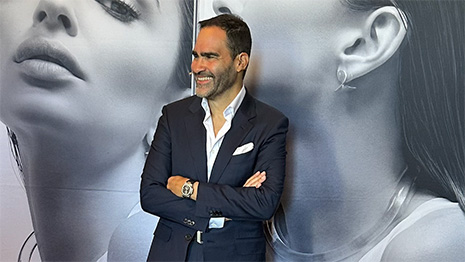
 Daniel Langer is the founder and CEO of consulting firm Équité
 A few weeks ago, I stood on stage in front of 500 luxury professionals and asked a simple question: “How many of you believe that client experience you are experiencing today is truly better than before?”
Not one hand went up. The silence in that room was revealing.
It confirmed what I have witnessed repeatedly during my work with brands across luxury categories: training is happening, but transformation is not.
From trained to transformed
Training remains essential. No brand can deliver excellence without it.
Yet many training programs are far too transactional, and as a consequence, completely miss the mark.
They focus on what to say, how to greet, how to close. They teach service mechanics instead of unlocking the psychology of luxury.
In doing so, they miss the real reason clients pay premium prices: the anticipation of feeling transformed.
Across every category, from automotive to hospitality, from fine jewelry to private aviation, the story is similar. Experiences have improved incrementally, but only rarely do they move clients emotionally.
My own mystery shopping evaluations reveal that out of one hundred encounters, maybe two or three stand out as memorable. The rest blend into a sea of sameness.
At the same time, the business signals are sobering. Porsche’s latest results show slowing sales even in markets once considered unshakable.
In my point of view, the transactional nature of the car dealership model is a major factor: Porsche increased prices in an unprecedented way, but the client experience is often getting worse. Major fashion houses report softening demand, and mystery shopping indicates that lack of client-centricity at the point of sale is a strong contributing factor in a world where products are often similar.
Hospitality, once seen as the model of service, increasingly delivers inconsistent and rather average experiences at luxury prices. This is not a problem confined to one industry; it is a crisis of service delivery across the entire luxury ecosystem.
In my work advising and training leading luxury brands, I see that the solution requires more than effort. Brands need an experience playbook anchored in their unique brand emotion.
Without this foundation, training programs risk producing polite uniformity instead of brand distinction. A great client experience must be designed from the inside out.
It needs to be rooted in what the brand stands for emotionally, then translated into every touchpoint.
Experience playbook
The process begins with clarity. Every brand must answer one decisive question: what emotion should our clients feel when they engage with us? Each emotion leads to a different tone of voice, a different pace, a different choreography of moments.
When the emotion is clear, the experience can be designed with purpose. Through my experience creating such playbooks, I have seen how this clarity transforms everything from recruitment to retail design.
The dilemma: many brands don’t have a clearly defined target experience.
I often find ambiguity, even at the leadership level. This ambiguity then translates into what clients feel.
Hence, clarity on what the brand stands for, emotionally, is the non-negotiable starting point. From there comes structure.
An experience playbook defines how that emotion unfolds across every interaction. In a hotel, it might shape the arrival ritual or the farewell moment.
In a car dealership, it might influence how test drives are staged or how ownership stories are told. In a restaurant, it might define the flow of anticipation between courses.
The goal is coherence. Every gesture, sound, texture and word must express the same emotional truth.
Developing this kind of structure has been central to my work with brands aiming to elevate their client experiences from service to storytelling.
Defining moment
Finally, culture turns theory into practice. Training then becomes more than an exercise in etiquette.
It becomes a process of cultural transformation. Teams must learn to think and act through the brand’s emotional lens.
That means understanding psychology, empathy, and storytelling, not just procedure. Leadership must live it visibly, and KPIs and measurement systems must reinforce it.
My experience conducting transformational trainings across luxury sectors shows that when leaders embrace this alignment, the results cascade through every level of the organization.
When training, emotion, and culture align, the results are extraordinary. Clients feel recognized, valued and moved.
Experiences gain distinctiveness. Brands recover pricing power and desire.
But when they operate in silos, the outcome is predictably bland: while technically correct it’s typically emotionally vacant and strategically dangerous.
Luxury is facing a defining moment. Economic headwinds and softening demand have exposed how fragile many experiences truly are.
The industry cannot afford to rely on legacy, product, or location. What will define success now is emotional precision and cultural alignment.
Hence, every brand should urgently ask: do we know the emotion that defines us? Have we built an experience playbook around it? Have we trained our teams not just to serve, but to inspire?
In my experience working with brands globally, the ones who answer “yes” are those shaping the future of luxury today. They see growth in a market where others decline.
Strategy and training must walk hand in hand, because only when both are aligned can luxury experiences rise from competence to distinction. Are you ready?
Luxury Unfiltered is a weekly column by Daniel Langer. He is the CEO of Équité, a global luxury strategy and creative brand activation firm, where he is the advisor to some of the most iconic luxury brands. He is recognized as a global top-five luxury key opinion leader. He serves as the executive professor of luxury strategy and pricing at Pepperdine University in Malibu and as a professor of luxury at New York University, New York. Dr. Langer has authored best-selling books on luxury management in English and Chinese and is a respected global keynote speaker.
Dr. Langer conducts masterclass management training on various luxury topics around the world. As a luxury expert featured on Bloomberg TV, Financial Times, The New York Times, Forbes, The Economist and others, Mr. Langer holds an MBA and a Ph.D. in luxury management and has received education from Harvard Business School. Follow him on LinkedIn and Instagram, and listen to his Future of Luxury Podcast.