
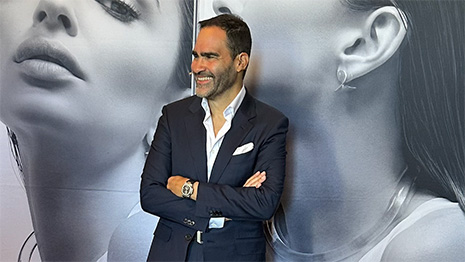
 Daniel Langer is the founder and CEO of consulting firm Équité
I am on my way to Las Vegas to present a keynote I have titled “The Architecture of Desire.”
The core argument is simple and uncomfortable: in luxury, the emotional decision comes before the rational one. Always.
And most professionals in the industry are still operating as if the opposite were true.
Luxury values
The timing feels right. Globally, ultra-high net worth individuals have grown by 44 percent since 2019.
The wealth is expanding. And yet more than half of luxury clients now say they consider luxury brands overpriced.
These two data points, taken together, reveal something critical. The problem is not spending power.
The problem is that the industry is losing its ability to make people feel something worth paying for.
AI is sharpening this crisis. Every data point, every specification, every comparison is now available to clients before they walk through the door.
The informational layer that professionals once controlled has been flattened. What remains is the one dimension that no algorithm can replicate: the ability to create an emotional response so powerful that price becomes secondary.
This is what I have been researching for years across luxury categories, from fashion to automotive to real estate to hospitality. Why do people pay extraordinary premiums for certain products and experiences while rejecting others that are functionally identical?
Industry estimates suggest that in some luxury categories, the market value of an object can exceed its production cost by 30x to 300x. The raw materials and craftsmanship are essential.
They are the foundation. But they do not explain the multiple; something else does. That something is the invisible architecture of perception, meaning and belief that surrounds a product, a brand, or a professional.
The physical object is the carrier. The system of perception around it is where the premium actually lives.
When that system is strong, value expands far beyond functionality. When it weakens, even excellent products start getting compared on price.
The mechanism underneath is what matters most. Luxury clients are not paying for what something is. They are paying for who they become through the purchase.
The anticipated version of themselves. The shift in how they are perceived, how they feel, how they move through the world after that decision.
That anticipated transformation is the real product. Everything else is packaging.
Here is the insight that changes how professionals should operate. That transformation is felt before it is analyzed.
Research across behavioral economics and decision science confirms what the best luxury professionals already sense intuitively: at the highest end of the market, commitment happens emotionally within the first moments of an encounter.
The analysis, the comparisons, the due diligence that follow are not the decision. They are the justification.
The client is building a rational case for something their intuition already chose.
Emotion first. Rationalization second.
The implications are significant. If the real decision is emotional, then leading with data, specifications and comparisons is addressing the wrong need at the wrong moment.
These are weak signals. They speak to logic. The strong signals, the ones that move ultra-high net worth clients toward commitment, speak to identity, transformation and belonging.
They answer the question: who do I become? Reading this, you might think the solution sounds straightforward.
Lead with emotion. Design better experiences.
Tell better stories. And conceptually, it is.
But here is what I observe again and again in my work with some of the most iconic luxury brands in the world: knowing the principle and executing it are entirely different challenges.
The vast majority of brands and professionals who attempt to sell “emotion” get it wrong. They add superficial storytelling on top of the same old product-centric approach.
Gucci’s dramatic sales downfall is a prime example. They confuse being loud with being meaningful.
They invest in beautiful environments but fail to choreograph the human moments that actually create the emotional shift. The result is expensive mediocrity dressed up as luxury.
The discipline required to do this well is closer to directing a film than managing a sales process. Every perception event has to be sequenced.
The comparison framework has to be shaped before the client even knows it is being shaped. The emotional narrative has to feel effortless while being entirely intentional.
And the most counterintuitive skill of all has to be mastered: knowing when to say no, when to create boundaries, when to protect the value system by refusing to compromise it.
Most organizations are structurally incapable of this because every incentive pushes toward more volume, more accessibility and more flexibility. Each of those impulses, left unchecked, erodes the very system that generates the premium.
Brand alignment
The four forces of my “4E’s of Luxury” framework sit underneath the emotional architecture.
Emotion creates the initial pull. Engagement sustains attention and deepens the relationship.
Experience validates the promise at every interaction. Exclusivity protects and amplifies desirability.
When all four are aligned, the client stops comparing and starts wanting. That shift is the most valuable moment in luxury, and engineering it consistently, across teams, across markets, across thousands of client interactions, is among the most difficult strategic challenges in business.
This is where the artificial intellegence conversation becomes personal. AI will absorb the transactional and informational layers of every luxury profession.
That is already happening. The professionals who will thrive are the ones who invest in what AI cannot do: creating emotional resonance so precise and so human that it becomes the single most valuable part of the client relationship.
The question I keep coming back to, and the one I will pose tonight in Las Vegas, is this: when your client leaves an interaction with you, what do they feel? Is that feeling strong enough to justify your premium?
Is it memorable enough to generate referrals? Is it human enough that no technology could replace it?
The architecture of desire is built on the answer to those questions. Right now, those who master that architecture have the opportunity of a generation.
The ones who assume they already understand it have the most to lose. Are you ready?
Luxury Unfiltered is a weekly column by Daniel Langer. He is the CEO of Équité, a global luxury strategy and creative brand activation firm, where he is the advisor to some of the most iconic luxury brands. He is recognized as a global top-five luxury key opinion leader. He serves as the executive professor of luxury strategy and pricing at Pepperdine University in Malibu and as a professor of luxury at New York University, New York. Dr. Langer has authored best-selling books on luxury management in English and Chinese and is a respected global keynote speaker.
Dr. Langer conducts masterclass management training on various luxury topics around the world. As a luxury expert featured on Bloomberg TV, Financial Times, The New York Times, Forbes, The Economist and others, Mr. Langer holds an MBA and a Ph.D. in luxury management and has received education from Harvard Business School. Follow him on LinkedIn and Instagram, and listen to his Future of Luxury Podcast.