
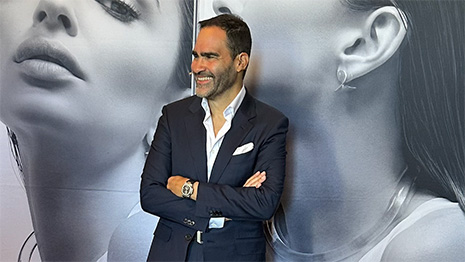
 Daniel Langer is the founder and CEO of consulting firm Équité
Luxury is currently experiencing a structural failure.
Most executives are trapped in a cycle of analyzing quarterly growth, creative director rotations and sell-through rates. They operate under the delusion that managing the short term effectively will naturally secure the future.
In the world of high-end brands, this logic is fatal, and this fundamental misunderstanding of what luxury represents to the client is leading to a widespread erosion of brand equity that few are equipped to stop.
The hidden factor of the perception shift
My systematic academic research into the psychology of extreme value confirms a truth that many brands are afraid to acknowledge. Clients do not buy luxury for quality or craftsmanship.
These elements are merely rationalization factors. They are the stories people tell themselves to justify a significant financial outlay.
The true hidden factor of a luxury purchase is the anticipated positive perception shift across multiple dimensions.
When an individual acquires a luxury item, they are fundamentally purchasing a transformation of their own identity. They anticipate feeling more attractive, more intelligent or more influential.
This is the intrinsic value of the brand signal. If the brand does not provide this emotional and social return on investment, the physical product becomes irrelevant.
Importantly, most brands underestimate the fragility of this perception shift. They treat it as a byproduct of marketing.
In reality, it is the core of their entire existence and the primary driver of their economic power.
Luxury as a sophisticated asset class
This psychological transformation is merging with a second, equally critical facet of the market.
Clients are increasingly treating luxury as a legitimate asset class. Items like rare handbags and limited-edition timepieces are now scrutinized for their resale liquidity and long-term appreciation.
Both the emotional perception shift and the financial investment follow the same underlying principle. They require absolute trust in the future management of the house.
If a client buys a luxury item to feel a specific shift in social standing, they must trust that the brand will remain prestigious for decades. If the brand signal weakens, the personal investment in that identity loses its value.
The same logic applies to the financial aspect. An investor only puts capital into an asset if they believe the house will protect its scarcity and desirability over time. Hence, the brand itself is the asset.
Every decision made today must serve the long-term integrity of that signal.
The failure of the short-term mindset
This is where most luxury brands fail. They are trapped in a cycle of managing the next three months.
They worry about the next trend or the next celebrity endorsement while ignoring the slow decay of the brand core. They treat the brand as a tool to generate revenue.
It should be treated as an asset that must be protected at all costs. In luxury, the long-term asset must always be at the center of the strategy.
Every short-term deviation that weakens the brand signal for the sake of a quick sale is a form of brand suicide.
The great separation is occurring because only a few brands understand that every transaction is a test of trust. If a brand dilutes its exclusivity or fails to provide a peak human experience, it destroys the anticipatory value that the client is paying for.
The investment value decreases instantly. Importantly, once a client perceives that a brand is being managed for the quarter rather than for the century, they take their capital elsewhere.
Managing the signal over the quarter
The industry must shift toward radical brand stewardship. This involves a commitment to excellence that transcends seasonal cycles.
A luxury brand only has a reason to exist as long as clients and investors see it as a stable store of value. This value is both emotional and financial.
To maintain this, leaders must be willing to sacrifice short-term gains to protect the long-term signal. They must move beyond the role of the business manager and become the guardians of an intangible asset.
Managers must recognize that they are not selling products. They are managing perceptions and protecting investments.
If a brand fails to treat itself as a long-term asset, eventually no one is willing to buy into its promise. Only the stewards of long-term extreme value will remain.
The question is no longer about growth. It is about the structural integrity of the dream.
Luxury Unfiltered is a weekly column by Daniel Langer. He is the CEO of Équité, a global luxury strategy and creative brand activation firm, where he is the advisor to some of the most iconic luxury brands. He is recognized as a global top-five luxury key opinion leader. He serves as the executive professor of luxury strategy and pricing at Pepperdine University in Malibu and as a professor of luxury at New York University, New York. Dr. Langer has authored best-selling books on luxury management in English and Chinese and is a respected global keynote speaker.
Dr. Langer conducts masterclass management training on various luxury topics around the world. As a luxury expert featured on Bloomberg TV, Financial Times, The New York Times, Forbes, The Economist and others, Mr. Langer holds an MBA and a Ph.D. in luxury management and has received education from Harvard Business School. Follow him on LinkedIn and Instagram, and listen to his Future of Luxury Podcast.