
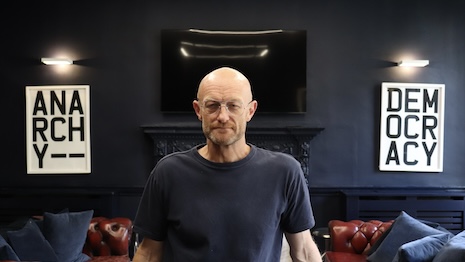
 Bob Sheard is cofounding partner of FreshBritain
 By Bob Sheard
Luxury's day of reckoning has hit home hard. Slowing growth at LVMH, Kering and others, supply chain controversies and the erosion of once untouchable brand codes is the dismal mood music.
Not that long ago, luxury, particularly luxury fashion, set the cultural agenda, defining aspiration, taste and even societal shifts. But the industry’s obsession with seasonal churn and novelty has eroded its leadership and influence.
The question is not what has gone wrong, but how to redesign luxury for the future.
Elegant decay: A better story for objects
Brand design, often treated simply as a marketing tool – aligning positioning, personality and purpose – has the potential to help address the deeper structural problems our industry faces.
It can guide us in formulating a new path to growth and recapturing an enduring cultural relevance reframed around sustainability.
This is the focus of my new book, The Brand New Future: How brands can save the world. In it, I outline how regenerative growth can replace extractive models: moving from “I own” to “I do,” from products to experiences and from depleting resources to respecting them or actively restoring them.
The approach is built around 21 regenerative brand design protocols; practical steps covering areas such as re‑framing desirability, embedding repair and reuse, building cultural intelligence into design and measuring impact beyond sales in an effort to reformulate growth.
These protocols are designed to be applied incrementally, making change accessible for heritage brands as well as luxury’s newer entrants. Brands like Simond and Chloé have already started on this journey.
Consumers are showing the way. Obsessed with novelty and newness, planned obsolescence and fashion’s whimsy, Gen Z in particular increasingly reveres experiences and memories more than things, yet luxury remains overly trapped in the logic of the 20th century.
Heritage houses, including Hermès, Cartier and Patek Philippe, already build repair and restoration into their offer. Their products are designed to endure, to be serviced and passed between generations.
Yet across the wider industry, these practices are under-celebrated, overshadowed by the constant chase for “new.” Framing longevity as part of desirability, celebrating the patina of ownership rather than treating wear as damage, could shift perceptions.
Brands such as Rimowa recast craftsmanship as future-proofed rather than throwaway, aligning with younger audiences who value authenticity and sustainability over conspicuous accumulation. The surge in luxury resale and repair platforms shows that cultural value increasingly accrues to what lasts, not what’s newest.
From products to experiences
While longevity can and must redefine products, business growth must also extend beyond them. The protocols also explore how luxury brands can turn their own heritage and expertise into experiences, monetising cultural capital through teaching, hosting and guiding rather than endlessly expanding SKUs.
Imagine watchmaking masterclasses at Cartier, one-to-one encounters with a master Champagne maker – Domaine Jacques Selosse, for example – equestrian retreats with Hermès, or voyages with Louis Vuitton. These would resonate with post-COVID consumers seeking memory and meaning, not just material goods, deepening loyalty without intensifying production.
As Bain & Company reported, luxury experiences such as travel, fine dining and wellness are outperforming sales growth for personal luxury goods, presenting an opportunity for brands ready to pivot.
Collaborations that change structure, not just aesthetics
Luxury’s sustainability problem isn’t just a lack of willingness or ambition; it’s the difficulty of putting those ambitions into practice. Leading global brands are often slow to adapt; smaller regenerative labels move faster but lack scale. Structural collaborations can bridge this gap.
Outdoor innovator Houdini licenses its circular design IP to bigger players, embedding change at a systems level rather than through marketing-led capsules. This principle of building partnerships that improve supply chains and embed sustainability is central to the regenerative design process.
It recognizes that transformation happens when external expertise is integrated into core operations, not bolted on through a limited‑edition project or seasonal storytelling. I believe luxury should embrace this model more widely.
Measuring success differently
For decades, luxury has measured success in sales growth and market share. But in a climate-constrained world, these legacy metrics alone are just not fit for purpose.
What I call regenerative key performance indicators, for example, cultural influence, wellbeing and climate impact, could redefine leadership. Brand design provides the tools for reframing these KPIs, ensuring brands measure cultural and environmental outcomes alongside financial ones, so that success reflects relevance, not just volume.
There are encouraging examples of this shift in action. Take Simond; the brand has evolved beyond just selling climbing gear to offer education in sustainable mountaineering, rental and repair services, specialist insurance products and wellbeing initiatives for mountain communities, effectively rebuilding a culture of care for the outdoors rather than just pushing product.
Or Chloé, the first major luxury fashion house to secure B Corp certification, tracking every product against living wages, gender equality and job satisfaction across their supply chain.
These are not token gestures but signals that meaningful change is possible when brands and consumers demand and reward it. We may not be able to shop our way out of the climate crisis entirely, but we can buy into the change we want to see.
The future meets the past
The recent Bezos-Sánchez wedding crystallised this tension: a maximalist spectacle emblematic of the past, witnessed at a time when many of the world’s consumers are attempting to tilt towards purpose and restraint.
Some famous names in attendance seemed to avoid the world’s cameras, possibly signalling discomfort with conspicuous excess? Luxury’s future lies in reconciling these worlds; retaining beauty and aspiration while evolving the codes that define them.
A design-led blueprint for change
Brand design, with its track record in making brands cool and desirable, can make them both regenerative and desirable.
It starts with a shift in mindset, from selling more to creating more meaning, enabled by a structured set of brand design protocols. From reframing metrics of success to re‑imagining customer journeys, luxury brands can move beyond ad‑hoc initiatives and systematically redesign how growth works.
The timing is propitious. Luxury consumers’ priorities are shifting from “own” to “do” and “have” to “know”, revealing new pathways to growth for open-minded luxury brands.
It’s a fresh route out of luxury’s growth dead end and a way to regain the leadership position the sector once held. Who wouldn’t want to seize an opportunity to reset the cultural tone for what aspiration means in the decades to come?