
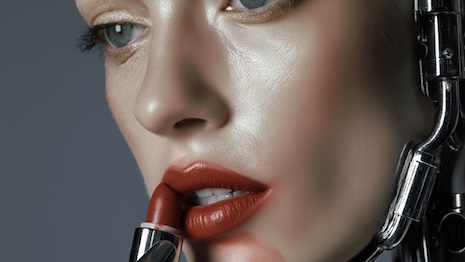
 The consultancy is warning of the potential adverse impacts of current market activities. Image courtesy of The Future Laboratory
 The Future Laboratory is revealing the uncertain outlook of the cosmetics sector in its latest findings.
Titled “The Great Beauty Blur,” the report details how bowing to contemporary stakeholder demands and sustainable growth strategies, while successful now, will lead to a homogeneous, digitally-led future for the industry. In particular, investing in emerging technologies, such as artificial intelligence, and catering products specifically to appeal to social media algorithms, is creating a monotonous identity for the beauty space and its clientele, regardless of brand.
"Luxury leaders must recognize that beauty’s biggest risk is sameness; The Great Beauty Blur identifies a sector drifting toward algorithmic monotony, copycat branding and investment-driven imitation – this is a dynamic that threatens differentiation at the top end of the market," said Olivia Houghton, insights and engagement director and beauty lead at The Future Laboratory.
"Executives should focus on the rising counter-currents: anti-fluency aesthetics, culturally rooted storytelling and dynamic, multi-sensory product design," Ms. Houghton said. "These emerging behaviors show consumers craving friction, nuance and emotional depth rather than polished perfection.
"With homogenization even shaping partner choice and long-term genetic diversity, luxury’s opportunity lies in championing singularity, cultural specificity and aesthetic boldness to drive desire in an increasingly flattened landscape."
The Future Laboratory’s latest report is based on a proprietary blend of qualitative research, case studies and expert interviews conducted across the global beauty and luxury cosmetics market. The publication also draws data from external outlets, such as Statista and BeautyMatter, among other sources.
Developing monotony
While the overall beauty market is expected to grow to generate nearly $800 billion by the end of the decade, up from $640 billion in 2024, credited to a wide-ranging, industry-wide transformation, which the consultancy claims is draining the creativity and distinct identity from the business.
While the 2010s centered on ideas of body positivity, wellness and the normalization of skincare routines, the 2020s are said to be defined by a great acceleration in technological advancement and adoption. Key to this push are social media platforms and their algorithms, which curate content and culture for a communal collective, creating an environment filled with homogenous beauty standards meant to maximize views and watch time rather than uplift creative or artistic concepts.
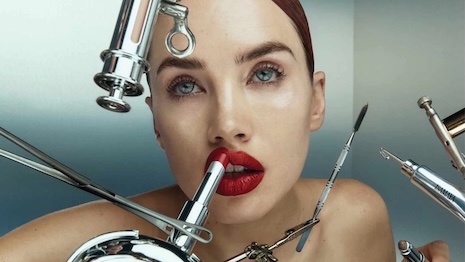 Although earnings are through the roof, the human element could be on the way out in the cosmetics sector. Image credit: The Future Laboratory/Isamay Beauty
In theory, wider access to the internet and the ability to share one’s ideas with the world should breed great diversity in trends, styles and niches. Instead, engagement and economies of scale have dictated success, with narrow beauty ideals following.
As a result, monotonous packaging, advertising and product offerings are prevalent across brands and segments, which previously held distinct identities. According to the consultancy, by catering to an algorithmically tested, singular ideal, the industry leaves itself vulnerable to being unable to adapt to the rapidly changing world around it.
“In a beauty and wellbeing landscape driven by speed, scale and low-risk strategies, sameness may feel safe – but it’s the fastest route to irrelevance,” said Madeleine Boyd, global SVP of beauty & wellness at parent company Together Group, in the report.
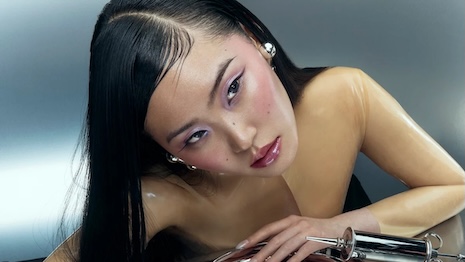 The firm foresees the industry embracing imitation over innovation. Image credit: The Future Laboratory/Isamay Beauty
Some labels are attempting to break this cycle, with the report’s authors citing multiple avenues of engagement as paramount to the market’s long-term success. Of note, appealing to localized, regional beauty standards is said to build brand authenticity while highlighting ethnic representation on a global stage.
Multi-sensory and dynamic experiences, such as evolving fragrance collections and avant-garde, transformative makeup lines, could challenge norms and build new trends; further embrace of the emerging category of haircare (see story) could also assist in this transition. The Future Laboratory cites the “clowncore” aesthetic, popularized by American singer-songwriter Chapell Roan, as an example of this disruptive strategy’s success.
The consultancy also urges operators to further engage with body positivity and self-acceptance narratives of years past to help consumers break from the distorted perceptions of identity that realistic AI videos and images, as well as viewing oneself through all manner of digital screens, have built over the past several years.
Glitch in the matrix
Beyond the beauty industry, many segments across the luxury space are also being greatly impacted by advanced technologies.
Fashion brands are enlisting AI stylists across digital storefronts, voice assistants are becoming popular across multiple high-end markets, digital passports are becoming a key factor in authenticating products and autonomous robotics continue to overtake several aspects of the travel and transport sectors.
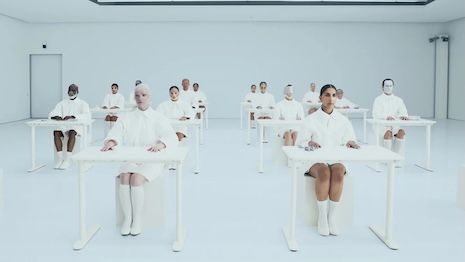 Adapting to technological advancement provides both positive and negative effects for the industry. Image credit: The Future Laboratory/The Ordinary
The Future Laboratory recently revealed that immersive technology and digital experiences are transcending traditional placements as key advertising expenditures, providing a new and fresh way to reach online audiences (see story).
Meanwhile, as AI begins to integrate into the luxury lexicon, experts question whether or not the industry can utilize the advanced programs without sacrificing its lucrative sustainability measures, as well as brands’ distinct senses of heritage (see story).
"Technology is accelerating both innovation and homogenization; algorithms shape aesthetic preferences by rewarding familiar, Eurocentric and hyper-filtered looks, while AI-generated branding and 'AI slop' risk further flattening creativity," said Ms. Houghton.
"Digital life fuels identity distortion; seen from filter-driven self-perception issues to beauty becoming quantifiable identity capital," she said. "At the same time, advanced scent systems, cosmetic software and bio-performance tools signal a new era of dynamic, adaptive beauty experiences; the tension lies in ensuring technology augments, rather than replaces, cultural nuance.
"Our research points towards a near future where the industry must use AI to expand expression, not narrow it, restoring human imagination at the centre of beauty."