

- No categories



How can we increase the chances of genius and separate the mobile hype from the very real need to engage our current and potential customers wherever and whenever they choose?



Apps are growing fast – and every indicator points to the fact that they will grow even faster. However, this rate of growth can only be maintained if app developers are able to keep their apps free.

As retailers begin to implement mobile technology to enhance the in-store experience, they should consider new ways to engage with consumers.

By focusing on the “what/which” thing, we may be missing the really big idea around mobile commerce: it creates the ability to personally engage consumers wherever they may be.

Major brands are increasing their deployment of mobile bar code campaigns every day and everywhere like never before. But which mobile bar code should you use?

The hidden gem in Apple’s WWDC conference keynote on Monday, June 6 is the significance that Apple’s deep integration of Twitter could have for marketers.

Nearly all the applications in the Apple AppStore, Android Marketplace and BlackBerry App World are native applications, with 44 billion app downloads projected by 2016.

As mobile technology continues to attract new, savvy and informed users, the banking industry must use innovative mobile techniques to connect with existing customers as well as attract prospects.

After the first session, mobile app usage goes way down, becoming almost non-existent by day 90.

Whether the phone is more secure than your cowhide wallet is not the point. Consumers are irrational folk and will adopt a technology on criteria that are not purely technological and not logical.

There I was, staring at my computer screen. Confused. Then it occurred to me, I was trying to find an iPad application – on my computer. My mobile life had collided with my computer life.

In many cases, marketers are still purchasing blind mobile buys and experiencing impressions discrepancies of up to 50 percent or more, making the need for verification necessary.

It has been surprising to see the snail’s pace at which the advertising industry has delivered innovation and new ideas for how to best reach the burgeoning mobile audience.

While there is room for new technology to transform how brands can reach consumers, competing markets and inherent weaknesses within each offering could hinder mainstream adoption.
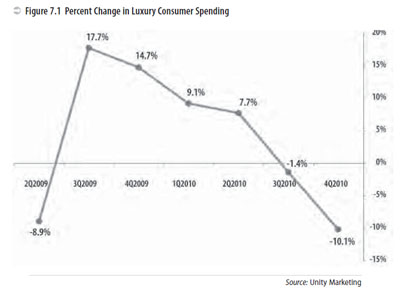
As Unity Marketing’s quarterly luxury tracking study has confirmed, American consumers are spending more on luxury goods and services in 2010 compared with 2009 and 2008—the depths of the recession.

Mobile search is surging, but the ability to get your product seen has never been more challenging.

Most organizations struggle with deciding which mobile channels to support. There are costs and trade-offs with each of the channels.

While mobile has been held as the promising new medium, it has really been applied somewhat as an adjunct to most brands’ main marketing programs.

Many retailers who consider themselves cross-channel are still struggling with a heavily siloed and disconnected environment.

With power shifting to the consumer, compressing margins and changing paradigms, retailers are employing a smarter commerce approach to buy, market, sell and service products.
While impeccable service, exclusive offers and personalized content are key elements for luxury brands, it is also important to recognize the customer’s on-the-go, connected lifestyle.