


- No categories



It turns out that the Chinese, both in rural and urban areas, empowered by China’s steadily solidified infrastructure, prefer conducting all commercial transactions online or on their mobile phone.



Like most people, I read and listen to mobile marketing pundits as much as I possibly can. From that sea of facts and opinions, there are three quotes that truly stand out and guide my mobile and cross-channel strategy. They are simple yet profound, and I believe they will stand the test of time.

Businesses are still learning and discovering new ways to use SMS mass texting and push notifications as consumer engagement forces. Each technology possesses its own strengths and it is important to understand what those are when creating a mobile marketing strategy.

American Express’ recently announced partnership with Uber on a first-of-its-kind loyalty program represents the latest attempt to evolve from executing transactions to creating meaningful human interactions.

The United States is an emerging market when it comes to luxury. The country has 23 percent of the world’s GDP and 44 percent of ultra-high-net-worth individuals and 30 percent of the world millionaires. Yet the U.S. represents only 20 percent of luxury good sales.

As prevalent as mobile advertising has become, one of its more powerful applications remains fairly idle: targeting the customers and prospects in your CRM database.

Today’s bubbly is actually still rarer than most people understand and there are clear production reasons why it is still expensive.

More than two-thirds of United States consumers now use smartphones, according to the latest Nielsen research. And, increasingly, more of those users are searching for something near them, whether it is a location, business hours or directions.

The seven “Cs” I am referring to are the seven pricing models used for buying ad campaigns on mobile. If you are not familiar with the various cost structures, you are likely to be shocked when the pricing model you chose does not align with your campaign goals

For years, the digital marketing industry has been waiting for mobile advertising to “pop.” Even as mobile consumption jumped to more than 50 percent for major Web properties, advertiser adoption continued to lag. Despite valiant efforts by the Mobile Marketing Association and the Interactive Advertising Bureau, marketers never seemed to move past the experimentation stage.

Because of its ability to provide marketers unprecedented insight into problems that could hinder an application’s broader release, a soft launch is one of the most effective tools for maximizing an app’s potential while mitigating risk.
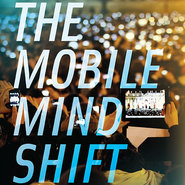
Mobile is the biggest, most pervasive, most powerful, and most global trend driving us toward the age of the customer. It creates demands not only on customer-facing parts of the business, but also on the systems that technology managers own, systems that must be re-engineered for the demands of mobile. If you want your company to succeed, you must retool it for the age of the customer.

For luxury marketers, 2014 is predicted to be the year that tips the scales, with more than half of affluent shoppers discovering, actively browsing and shopping for luxury items via digital channels.

Under discussion is the industry’s focus on mobile video advertising, what marketers should do today to improve mobile advertising engagement and how creating a mobile-first mindset is key for continued success.

With iOS 8 unveiled at WWDC this week, Apple is giving us a glimpse at a key enhancement that will reduce friction for bidirectional communication between users and the services they trust with space on their phones and in their lives.

Just because something is online does not mean that it is interactive. Similarly, an interactive experience does not have to be online.

Mobile banner ads are almost universally panned for their ineffectiveness. They may be well suited for desktops, but fail to deliver the right handheld experience.

My goal with this article is to provide some practical advice to keep you from getting lost in the world of mobile testing.

There is no universal definition of what is a luxury product, service or experience.

I was struggling through a cup of horrific Mock-a-Java recently when I came across an article that caused me to spill.

Sports advertisers care about reaching the right audience, but many of the current approaches they take to find relevant audiences are ineffective. Digital advertising was meant to address this, but too often, the audience tools used to target consumers are just as broken as the spray-and-pray model of television advertising.