


- No categories



According to Forrester Research, mobile devices generated $50 billion in revenue in 2013 and are forecasted to generate $82 billion in 2014. Consumers using mobile devices spend 86 percent of their time within applications, making apps the clear leader in driving revenue over the mobile Web.



A study from Forrester Research Inc. showed that 51 percent of luxury shoppers expect retailers to have a mobile site, 49 percent expect a mobile application and 43 percent expect to be able to make purchases on a mobile site or app.

Mobile marketing is at the forefront of some of the biggest transformations that we are seeing across the board. With these changes comes uncertainty, and if we stick to the standard and known ways of doing things, we will fall far behind.

To help retailers address growing customer expectations and improve in-store experiences, there are three key areas where mobile can drive greater differentiation and value.

The core of mobile’s power is in its ability to drive sales in the context of the marketing funnel.

People say that you have to do what you love to be successful at it. That’s especially true in real estate because it’s a 24-hour, seven-day-a week passion, not a nine-to-five job. In today’s world, everything is about real estate. Owning a home is the heart of the American Dream, and real estate is the financial engine that drives our economy.

Mom, no mobile phone at the dinner table! Ever imagine the day where you would hear that?

Though companies can succeed in advertising technology because of scale, first-mover advantage or even having the best sales organization, only proprietary technology can provide a sustainable competitive advantage.

Mobile is now taking on television. We spend more time chatting, texting and surfing on our mobiles each day than we do pinned to the sofa absorbed by the boob tube, according to a recent study from Millard Brown.

The following tips from the front-lines are proven strategies that marketers can practice to ensure that their mobile ad campaigns are set up for success.

The average consumer is arguably more knowledgeable than ever before about the impact of her everyday habits. What started with eating organic or ditching the SUV is slowly evolving into a wholesale approach to conscious consumption that includes the clothes we wear and the objects that decorate our home.

Mobile payments, particularly in the retail setting, are a great example of an industry that is experiencing change in a slow, gradual way. Just take a look at the progress we have seen in self-checkout.

Studies and heat maps have adequately demonstrated that the advertisement gets ignored for the most part and that even hyper-targeted and relevant messaging has a small conversion or click-through rate.

Multichannel customers spend more. Walgreens customers who shop in-store and online spend 3.5 times more than customers who shop in-store only. Those who shop in-store, online and via mobile spend six times more.

Space travel will start out as something like a luxury experience, not in terms of comfort, but in cost and therefore exclusivity. You can go to space if you want to, are physically fit enough, and have the money. The barriers are starting to come down.

Some apps know everything about a user – name, birthday, purchase history and location – without the consumer even realizing it. This information helps marketers personalize messages. But when do brands step over the line with this rich data set?

If you cannot see the watch or loafers brand that online or mobile browsers are wearing, there are still things we can observe, track and analyze to determine the difference between a window shopper and an actual customer.

With the recent high-profile security breaches in the retail industry, and growing adoption of mPOS among larger retailers and businesses, the bar has been raised on mPOS security features.
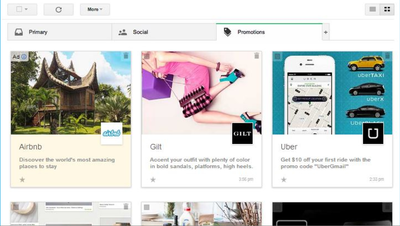
Google has made possible something that email marketers everywhere have only dared dream of: optimizing to the open-in-real-time using machine learning.

Advertisers expect two things from their media partners: the ability to anticipate consumers’ needs, and the ability to change behavior.

While the talk of mobile advertising is loud and the technology is available, adoption by marketers is still in its early stages. Their hesitation is understandable. No digital marketing solution can achieve real scale until the measurement problem has been solved.